Learning clocks and time-telling toys for kids, geared and free-hand, with the pros and complaints parents report. From first wooden clocks to elapsed time.
Last updated
An analog clock is a strange user interface. Two pointers on one dial, the short one means hours, the long one means minutes, the same numbers mean two different things, and the hour hand is supposed to sit between numbers most of the time. If I shipped a dashboard like that, I would get bug reports. So I am not surprised when kids find it hard.
What a good time-teaching toy does is take that interface apart: one piece of it at a time, with something that tells the child whether they got it right. This page is a short, focused list, because only so many toys in our catalog genuinely teach clock reading. Counting and money live in math toys for kids and toys that teach money. I also read the Amazon reviews for every pick here, and parents complain about one thing far more than anything else. More on that below.
Compare and read in one place
As an Amazon Associate I earn from qualifying purchases. When you use a retailer link, we may earn a commission. It does not change what you pay.
Approx. price ranges: $ under $15 · $$ $15–30 · $$$ $30–60 · $$$$ $60+. Check today's price on Amazon.
Melissa & Doug · 3–6 yrs
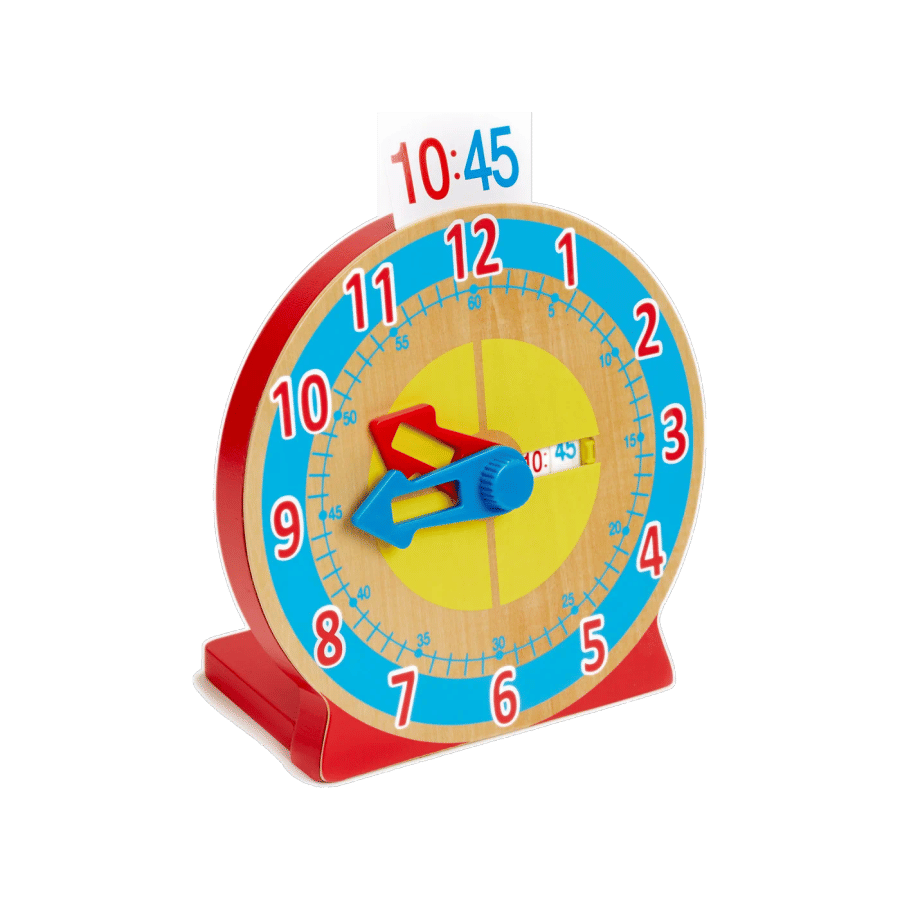
Melissa & Doug Turn & Tell Wooden Clock: move the hands to match time cards while a digital window shows the same time. A first clock for ages 3-6.
Learning Resources · 3–7 yrs
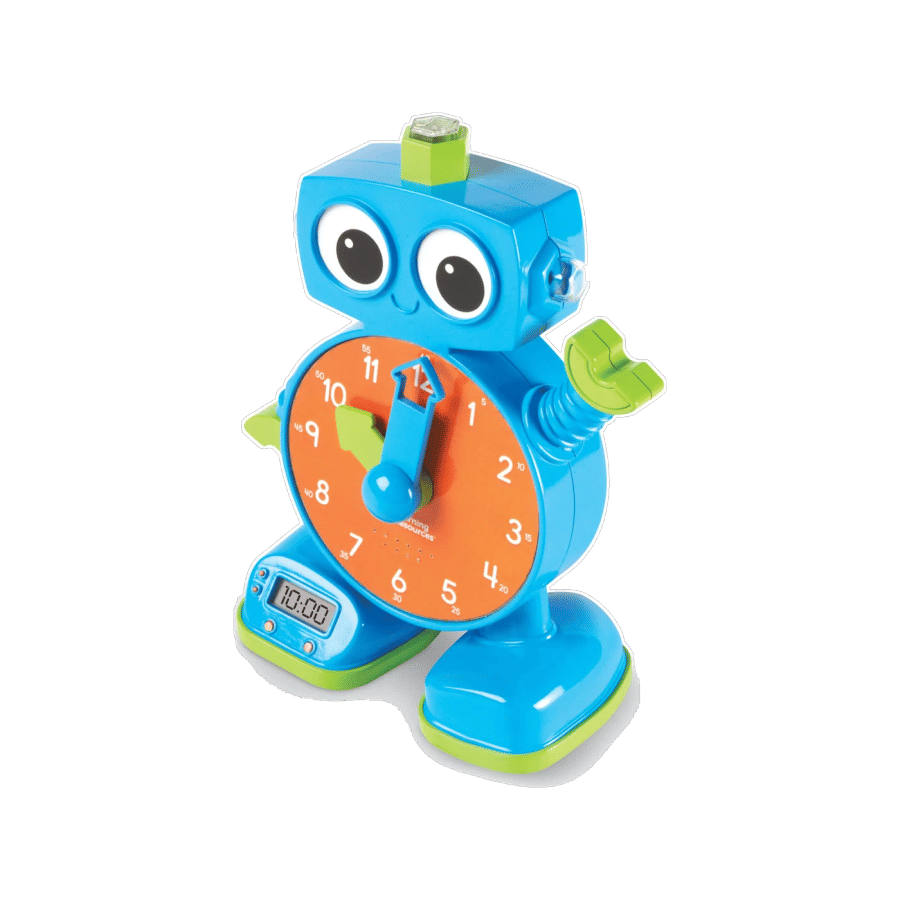
Tock the Learning Clock: a talking clock with analog and digital time, quiz games and an OK-to-wake light. Time-telling practice for kids ages 3-7.
Approx. price range. Check today's price on Amazon.
Learning Resources · 4–9 yrs
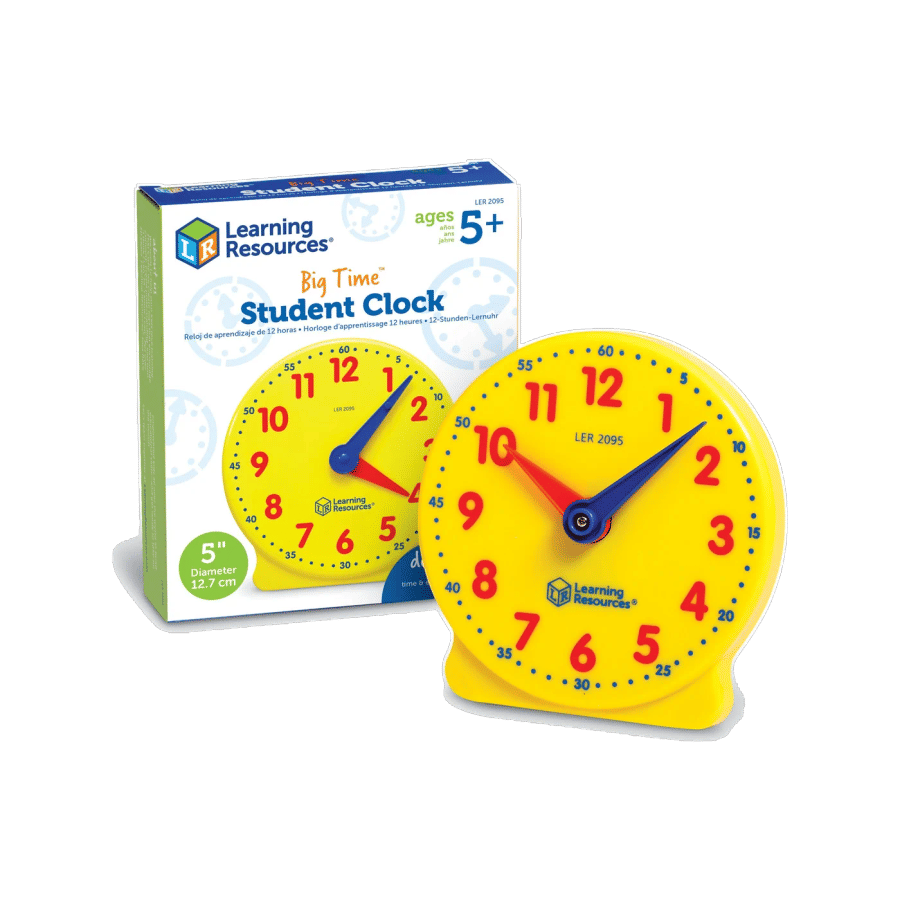
Big Time Student Clock: a geared, color-coded learning clock whose hour hand moves with the minute hand. Hands-on time practice for kids ages 4-9.
Learning Resources · 5 yrs+
Big Time Mini Clock: a small geared practice clock with color-coded hands that keep the hour hand in step. Sized for small hands, ages 5 and up.
hand2mind · 5–8 yrs
hand2mind Mini Geared Clock: a small 12-hour analog practice clock with large red hour numbers, minute dots and color-coded hands. Time practice for ages 5-8.
Approx. price range. Check today's price on Amazon.
hand2mind · 5–10 yrs
hand2mind NumberLine Clock Sensory Bubble Popper: a learning clock, number line and pop-it in one, making five-minute jumps easy to see, for ages 5-10.
Learning Resources · All ages
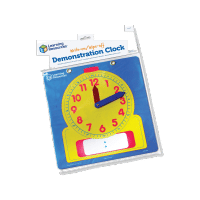
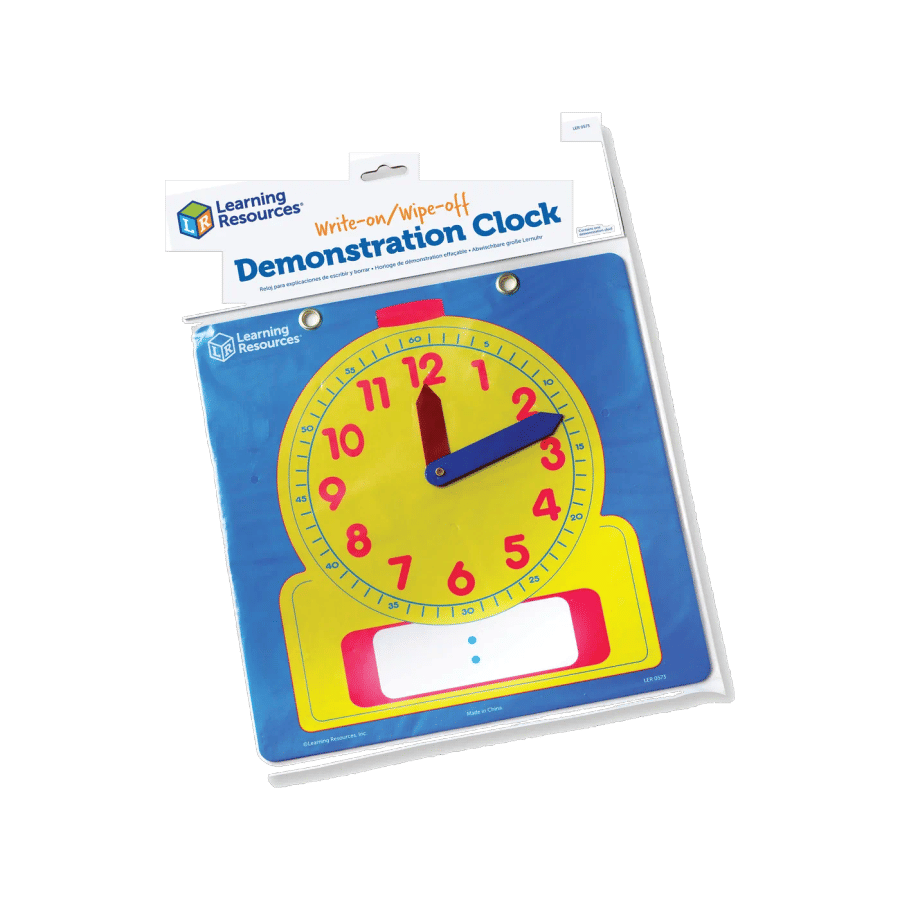
Write & Wipe Demonstration Clock: a large teaching clock with movable hands and a dry-erase panel for the digital time. Daily time drills for groups.
Learning Resources · 7 yrs+
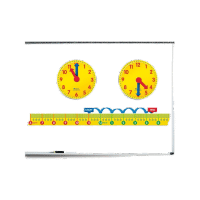
Magnetic Elapsed Time Set: magnetic clocks and a segmented timeline for working out how long things take, even from PM into AM. Time practice for ages 7+.
Almost every clock below falls into one of two camps, and choosing the wrong one is the most common reason a reviewer is disappointed.
| Geared hands | Free-moving hands | |
|---|---|---|
| How it works | Turn the minute hand and the hour hand follows, like a real clock. | Each hand moves on its own. |
| Good for | Seeing how the hour hand creeps forward. Never showing an impossible time. | Quick "set it to 3 o'clock" games for little kids. |
| What reviewers complain about | "The hands don't move separately." That is the design, not a defect. | Times that can be set wrong, and hands that are stiff for small fingers. |
| Picks here | Big Time Student, Big Time Mini, Mini Geared Clock | Turn & Tell, Write & Wipe |
My take: start a preschooler on free hands for play, then switch to geared once they are actually reading times. The geared clock is the more honest model of a real clock.
Turn & Tell Wooden Clock (about 3 to 6) has time cards to match and a little digital window that changes as you move the hands. That pairing of analog and digital is the bit I like most. Amazon reviewers call it durable and a good teaching tool. The repeated complaint is stiff hands: one grandparent says their 4 year old cannot move them, and others say the times do not always line up.
Tock the Learning Clock talks, shows analog and digital time, runs quiz games and has a green OK-to-wake light. Because it keeps real time, the lesson happens all day, not only at practice time. Reviews are more mixed here than for the simple clocks. Some parents say it does not keep correct time or that the digital and analog disagree, one says theirs broke within a week, and some find the green light too bright for a bedroom (Amazon reviews).
Big Time Student Clock is the geared clock many kids meet in the classroom, and it has the most reviews of anything on this page. Reviewers say it works just like a regular clock and is good for first graders. Some say it is smaller than they pictured, and one was frustrated that the hands do not move separately, which, again, is the point of a geared clock (Amazon reviews).
If you want the same idea in a pencil case, there are two small options. Big Time Mini Clock is about four inches across. Reviewers say it suits small hands, but some call it very small and a few report it coming apart early (Amazon reviews). Mini Geared Clock from hand2mind has large red hour numbers and minute dots. Reviewers like how easy it is to read, but several say it is smaller than expected, and one says the stand falls out whenever you pick it up (Amazon reviews).
NumberLine Clock Sensory Bubble Popper combines a clock face, a number line and pop-it bubbles, so the five-minute jumps are something you press. One teacher reviewer says the pop-it style lifted engagement with a hard skill, and a parent says it helped their 5 year old learn to tell time (Amazon reviews). I did not find a clear complaint in the reviews I could read, but there are far fewer of them than for the Big Time clocks.
Write & Wipe Demonstration Clock has a 12-inch face and a dry-erase panel for writing the digital time. It is a teacher's tool that also works at a kitchen table with siblings. Reviewers like the size. The complaint is the hands: some find them hard to turn, and one teacher says the hands were not secure enough and returned three of five (Amazon reviews).
Magnetic Elapsed Time Set (about 7 and up) pairs magnetic clocks with a segmented timeline for working out how long things take, even from PM into AM. This is the step most toys skip. Homeschooling reviewers like the visual, hands-on approach. One says the hands can be a little tough to set exactly where you need them (Amazon reviews).
Across nearly every clock on this page, the most common complaint is the same: the hands. They are too stiff for small fingers, too loose to hold a time, or geared when the buyer expected them to move freely. None of that shows up in a product photo. If your child is on the young side, I would lean toward the clock with the fewest stiffness complaints for their age, and keep the receipt.
What I left out on purpose: timers and time-themed games that never ask the child to read a clock face. They may be fine toys. They just do not belong here.
It varies a lot. The toys here are labeled from about 3 for play clocks up to about 7 for elapsed time. Start with the hour, then half past, then five-minute steps.
Free hands are easier for very young kids to play with. Geared hands show how a real clock behaves and cannot show an impossible time. Many families end up using both at different stages.
Not always. A talking clock like Tock adds quizzes and real time, but its reviews are more mixed on accuracy and durability. A plain geared clock is simpler and has fewer things that can go wrong.
Tock does, because it is a working, talking clock. The manual practice clocks on this page are meant to be turned by hand. Check the product page before you buy.
Keep exploring
Related guides, plus the brands and categories behind these picks.
 Best Math Toys for Kids, by Age
 Toys That Teach Kids About Money
 Baby Sensory Toys: 5 Picks for 0–12 Months
 Best Arts and Crafts Toys for Kids