Engineering toys for kids, with ages and rough price ranges in the picks table. Compare gears, builds, and kits that show how things work.
Last updated
Engineering toys for kids are the ones that show what happens when you change a piece: a gear turns, a marble finds a new path, a hand opens, a wheel rolls farther. This guide compares a set of recommended picks from our engineering toys category, with ages and rough price ranges in the picks table.
The list runs from early gear play to older marble runs, logic mazes, and build kits. If you want a wider science-and-build mix, start with STEM toys. If the child mostly wants to stack and connect, the building and construction guide may be the better first stop.
Compare and read in one place
As an Amazon Associate I earn from qualifying purchases. When you use a retailer link, we may earn a commission. It does not change what you pay.
Approx. price ranges: $ under $15 · $$ $15–30 · $$$ $30–60 · $$$$ $60+. Check today's price on Amazon.
Learning Resources · 3–10 yrs
Gears! Gears! Gears! 100-pc Deluxe: Colorful interlocking gears, pillars & crank build spinning STEM creations. Fine motor fun for ages 3+.
Approx. price range. Check today's price on Amazon.
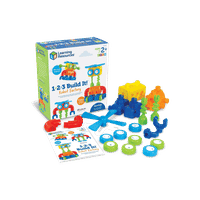
Learning Resources · 2–5 yrs
1-2-3 Build It! Robot Factory: 18 chunky pieces craft robots for ages 2+. Builds fine motor & early engineering skills with activity guide.
Approx. price range. Check today's price on Amazon.
K'NEX · 7 yrs+
K’NEX Adventure Wheels lets kids 7+ build 35 models with 480 snap-fit pieces, featuring real moving parts for creative STEAM learning and endless fun.
Approx. price range. Check today's price on Amazon.
MindWare · All ages
KEVA Contraptions: 200 wooden planks + 2 balls for marble runs. No glue, smooth builds teach physics & creativity. Endless STEM fun for kids!
Approx. price range. Check today's price on Amazon.
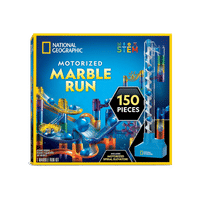
National Geographic Kids · 8 yrs+
National Geographic Marble Run kit with motorized lift, 150 pieces & 30 marbles offers endless STEM fun and learning for kids 8+ with expandable design.
Approx. price range. Check today's price on Amazon.
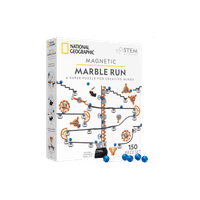
National Geographic Kids · 10 yrs+
National Geographic Magnetic Marble Run: 150-pc STEM set with lift, tracks & tricks builds vertical mazes on metal surfaces. Teaches physics for all ages.
Approx. price range. Check today's price on Amazon.
ThinkFun · 8–15 yrs
ThinkFun Gravity Maze STEM toy for kids 8+ features 60 puzzles, marble runs & towers to boost critical thinking, logic, and problem-solving skills.
Approx. price range. Check today's price on Amazon.
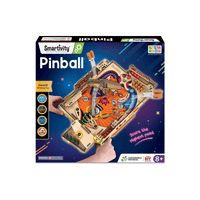
Smartivity · 8–14 yrs
Build your own wooden pinball machine with 375 snap-fit parts, 23 marbles & flippers. Award-winning STEM toy teaches physics via arcade thrills for kids 8-99. Lifetime free parts!
Approx. price range. Check today's price on Amazon.
Thames & Kosmos · 7 yrs+
Thames & Kosmos Mega Cyborg Hand kit lets kids 7+ build an adjustable, hydraulic robotic hand with 203 pieces—no motors, just air pressure and STEM fun.
Butterfly EduFields · 8–12 yrs
Butterfly EduFields Girls Engineering Kit: 50-pc STEM set builds 100+ projects like vacuums & robots for ages 8-15. Sparks STEAM creativity & skills.
Approx. price range. Check today's price on Amazon.
Pick a toy that makes cause and effect visible. The child should be able to change one thing and see a new result, not only follow a poster to a single finished model.
| Look for | Why it matters |
|---|---|
| Moving parts you can see | Gears, ramps, levers, and rolling paths teach more than a static display model. |
| A first build that can finish | The opening project should fit one sitting. Later contraptions can sprawl. |
| Room to leave the work up | A marble run or large gear set needs a table or floor that will not be cleared for dinner every night. |
| Instructions the child can use | Pictures plus short steps work. A manual that needs you on every line will not come out on a Tuesday. |
| The true age range | Some sets start at 2 or 3. Others are happier at 8 or 10. Read the row before you wrap it. |
These toys overlap with problem-solving because the child has to try, adjust, and try again. That is the point. A set that only snaps together one way is a weaker engineering toy, even if it looks impressive on the box.
Start with large gears or a simple build-it set with chunky pieces. The child is learning that turning one wheel can turn another. Sit nearby, name the parts, and let them rebuild the same idea more than once. Keep loose small connectors for later.
This is a strong age for a first wheels-and-axles construction set, a wooden contraption kit, or a logic maze that uses gravity and planning. The child can follow a model and then change it. Leave the project standing if you can. A build that must be packed away every evening is harder to finish.
Marble runs, a pinball-style machine, a hydraulic hand, or a beginner electronics-and-mechanics kit all belong here. Check batteries, small parts, and how much help the first session needs. Some kits are labeled with a wide age range; use the child's patience and your supervision, not only the number on the box.
These are toys we chose from the catalog for engineering play, not a lab ranking. The picks table is the recommended set. Other construction sets and STEM kits that lean less on moving parts stay on their category pages.
Match the age and the space you have, then compare two rows in the picks table. If the child wants a wider mix of science and coding, switch to a STEM guide. If they want bricks more than mechanisms, use the construction or building blocks list instead.
A toy where the child builds or arranges parts so that something moves, balances, rolls, or otherwise changes when they adjust a piece. Gears, marble runs, simple machines, and construction sets with working parts all count. A painted model with no moving parts usually does not.
Large gears and simple build sets with chunky pieces. At five, the lesson is that one action causes another. Save motorized marble runs, hydraulic kits, and fine connectors for later unless you will do most of the build together and the age on the box includes this child.
Some marble runs and motor kits need batteries. The picks on this page are hands-on builds, not app lessons. Read the product row if a motor is involved, and keep spare batteries in the house before you start.
Show the first connection, then wait. If you place every gear, the child is watching you engineer. Stay for safety, and step in when frustration is about to end the session, not at the first pause.
Keep exploring
Related guides, plus the brands and categories behind these picks.
 Best Marble Runs for Kids, by Build System
 Baby Sensory Toys: 5 Picks for 0–12 Months
 Best Arts and Crafts Toys for Kids
 Best Building and Construction Toys